
Delving into the realm of vinyl siding installation costs, this introductory paragraph aims to provide a comprehensive overview that intrigues the reader.
As we navigate through the details, you'll uncover valuable insights and key considerations surrounding the average cost to install vinyl siding.
Factors Affecting Cost
When it comes to the cost of installing vinyl siding, there are several factors that can influence the overall price. Understanding these factors can help homeowners make informed decisions and budget accordingly.
Quality of Materials
The quality of the vinyl siding chosen for the installation can have a significant impact on the cost. Higher quality materials will generally cost more upfront but can result in better durability and longevity, potentially saving money in the long run.
Size of the Home
The size of the home is another key factor that affects the cost of installing vinyl siding. Larger homes require more materials and labor to complete the installation, leading to higher overall costs compared to smaller homes.
Accessibility of the Property
The accessibility of the property plays a role in determining the cost of vinyl siding installation. Factors such as the location of the home, the presence of obstacles like trees or landscaping, and the ease of access to the exterior walls can impact the complexity of the installation process and, consequently, the cost.
Labor Costs
Labor costs can vary based on factors such as the experience and skill level of the installation crew, the time of year, and the location of the home. Higher labor costs can increase the overall price of the project, while lower labor costs may result in savings for homeowners.
Additional Features or Customizations
Adding extra features or customizations to the vinyl siding installation, such as trim work, decorative elements, or unique color choices, can also impact the cost. These additional details require more time and materials, leading to an increase in the overall price.
Local Market Prices
Finally, local market prices can influence the cost of installing vinyl siding. Prices can vary based on regional labor rates, material costs, and competition among contractors. Homeowners should research local prices to get an accurate estimate for their specific location.
Average Cost Comparison
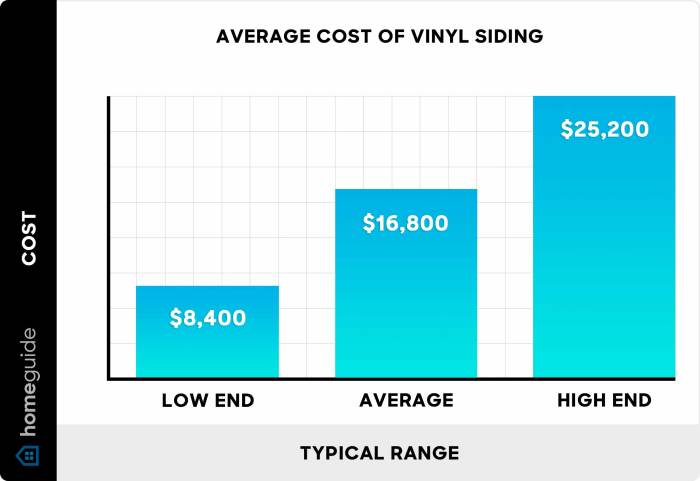
When comparing the average cost of installing vinyl siding to other types of siding materials, it is important to consider the factors that contribute to the differences in cost. Vinyl siding is generally more affordable compared to materials like wood, fiber cement, or brick.
This cost difference can be attributed to the lower material and installation costs associated with vinyl siding.
Reasons for Cost Differences
- Vinyl siding is a synthetic material that is manufactured at a lower cost compared to natural materials like wood or brick.
- The installation process for vinyl siding is typically easier and quicker, resulting in lower labor costs.
- Maintenance costs for vinyl siding are minimal, making it a cost-effective option in the long run.
Advantages and Disadvantages of Choosing Vinyl Siding Based on Cost
- Advantages:
- Vinyl siding is affordable and cost-effective compared to other materials.
- Minimal maintenance requirements reduce long-term costs for homeowners.
- Various colors and styles are available at different price points, offering flexibility for budget-conscious consumers.
- Disadvantages:
- While cost-effective, vinyl siding may not have the same aesthetic appeal as natural materials like wood or brick.
- Extreme weather conditions can impact the durability and longevity of vinyl siding, potentially leading to replacement costs.
- Resale value of a home with vinyl siding may be lower compared to homes with premium siding materials.
Cost Breakdown

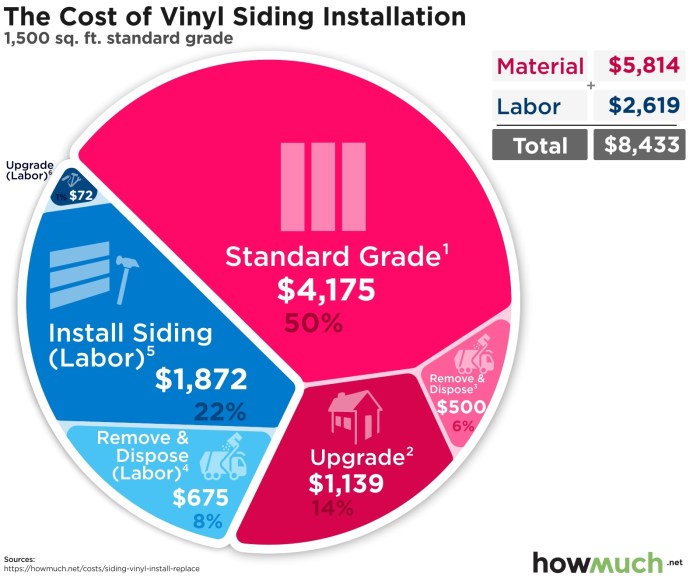
When looking at the average cost to install vinyl siding, it's important to understand how this cost is broken down. Typically, the total cost includes labor, materials, and additional expenses. Each component plays a crucial role in determining the overall cost of the installation.
Labor Costs
Labor costs usually account for about 50-60% of the total cost of installing vinyl siding. This includes the cost of hiring professionals to install the siding, which involves measuring, cutting, and attaching the vinyl panels to the exterior of the house.
Labor costs can vary depending on the size of the project, location, and the experience of the installers.
Materials Costs
Materials costs make up around 30-40% of the total cost of vinyl siding installation. This includes the cost of the vinyl siding panels, trim pieces, fasteners, and any additional materials needed for the project. The quality and brand of the materials chosen can impact the overall cost of the installation.
Additional Expenses
Additional expenses typically make up the remaining 10-20% of the total cost. These expenses may include permits, disposal of old siding materials, equipment rental, and any unexpected issues that may arise during the installation process. It's important to budget for these additional expenses to avoid any surprises during the project.Overall, understanding the breakdown of costs for vinyl siding installation can help homeowners better prepare for the total investment required for this home improvement project.
Cost Saving Strategies
When it comes to reducing the average cost of installing vinyl siding, there are several strategies and tips that homeowners can consider. Whether it's opting for a DIY approach or being mindful of potential pitfalls, being proactive can help save money in the long run.
Consider DIY Installation
One of the most significant ways to save on vinyl siding installation costs is by considering a do-it-yourself approach. By taking on the project yourself, you can eliminate labor costs and potentially save thousands of dollars. However, it's important to have the necessary skills, tools, and knowledge to ensure a successful installation.
Shop Around for Materials
Another cost-saving strategy is to shop around for the best deals on vinyl siding materials. Compare prices from different suppliers and look for discounts or promotions that can help lower the overall cost of the project. Additionally, consider purchasing materials in bulk to take advantage of wholesale pricing.
Avoid Unnecessary Add-Ons
When planning your vinyl siding project, it's essential to avoid unnecessary add-ons or upgrades that can quickly inflate the total cost. Stick to the basics and focus on what is essential for your home's exterior. By prioritizing key elements and avoiding unnecessary expenses, you can keep the project within budget.
Proper Maintenance and Care
One often overlooked cost-saving strategy is to properly maintain and care for your vinyl siding after installation. By regularly cleaning and inspecting the siding, you can prevent damage and prolong its lifespan, ultimately saving money on repairs or replacements down the line.
Closing Summary
In conclusion, the discussion on the average cost to install vinyl siding sheds light on important factors and comparisons that can aid in decision-making.
General Inquiries
What factors can influence the cost of installing vinyl siding?
Factors such as size of the project, quality of materials, and labor costs can impact the overall cost.
How does vinyl siding cost compare to other siding materials?
Vinyl siding tends to be more affordable compared to materials like wood or fiber cement.
What are some cost-saving strategies for vinyl siding installation?
Opting for DIY installation, buying materials in bulk, and comparing quotes from different contractors can help reduce costs.